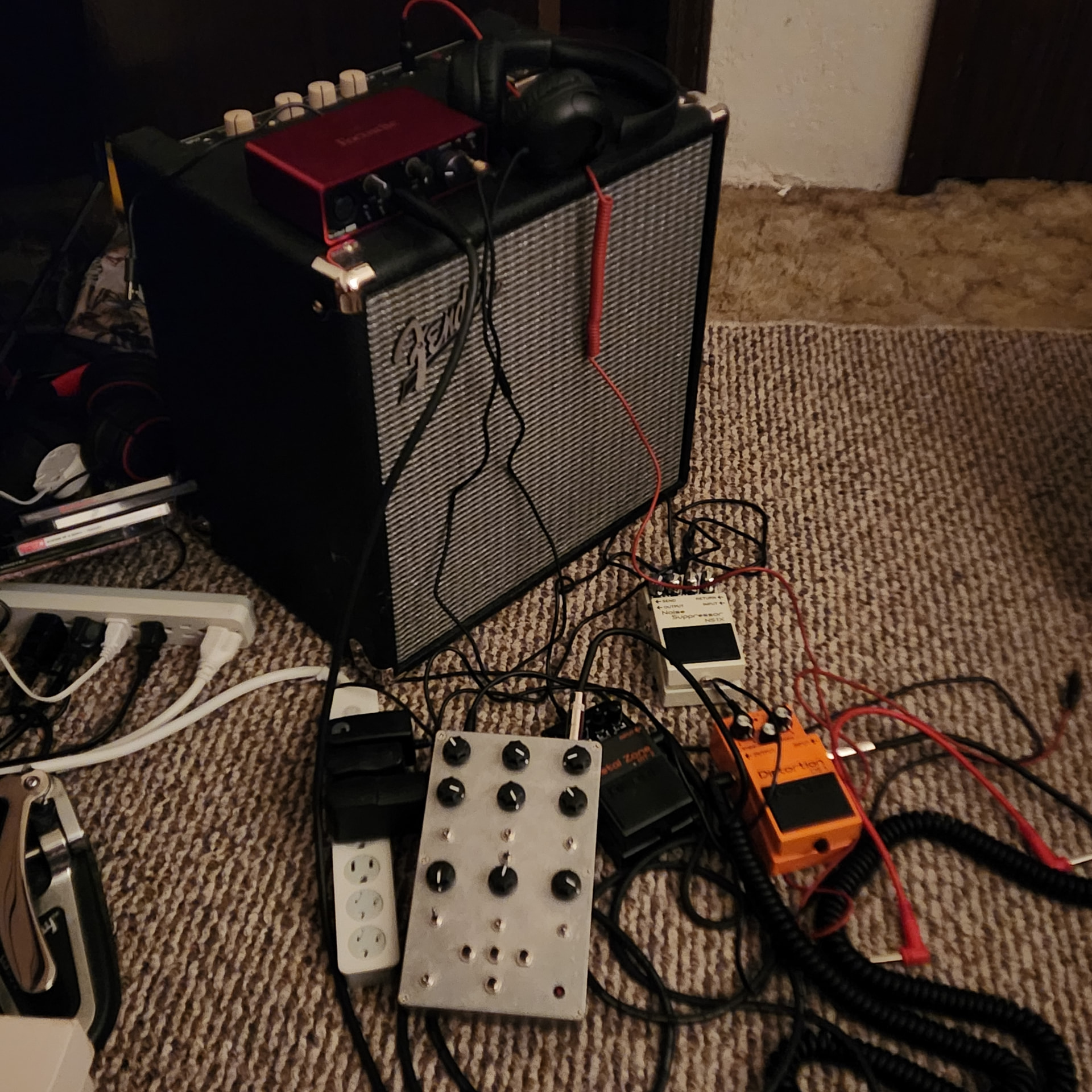
“Every single sound is interesting.” - John Cage
At San Francisco State when I would be rehearsing piano in their tiny little practice studios, the fire alarms would occasionally go off (tests, drills, etc.) And they were loud, obnoxious, NOIIIISY fuckers – this type of alarm was designed to send a shockwave from your ears down to the base of your spine. straight up sonic warfare shit. normal people (aka not me) would be like “get me the fuck away from this shit” upon hearing it. its peak was 3000 hz (with subharmonics), at about the highest legal level (about 110 dBA), at 24V DC which is basically meant for industrial jet hangars not colleges haha. Our piano studios sat in the middle of the building with a big hallway and the actual alarm hung from the ceiling smack-dab in the middle. I always thought it so ironic that they decided to install a system so detrimental to the human ear after long exposure right in the middle of the music department’s practice quarters 
If we were warned beforehand by school admins that the alarm would be going off that day, the few students that cared about their education (many didn’t — entitled little shits) would hate to vacate a practice space graced with a piano because
-
-
the rooms were first come first serve.
-
if you left your practice room, there’s always a person reading outside in the hall waiting for you to leave
-
composition majors with a focus on piano (aka me) did not have first dibs to the nice grand pianos in the larger rooms like the piano majors did.
-
i had way too much music to learn and compose to be giving up my practice room to a singer who wanted to practice their runs or scales…. because of a stupid fuckin alarm?! heck no, techno!
Anyway, as this alarm be blaring, I realized the gradual shift of experience of the sound from causing panic (adrenaline rush) to becoming actual sound material. I’d use its pitch as a fundamental, playing piano and sometimes singing around it, harmonizing different blends of chords, syncing with the temporal structure that revealed itself in the prolonged tremelo-less pitch. What I mean is that after listening to a pitch of grating noise that loud for that long, our brains begin to actually sense a rhythm of crests and troughs of the amplitude in the waveforms which normally is filtered out by our collective linear sense of time. Once the cortisone wears off and the sound is still going, it causes time dilation and everything slows down.
This is a long way to say that shrill noise expressed in “harsh walls of sounds” (standing near a jet plane taking off, being in a room full of crying babies, going to a Seattle Seahawks game etc.) actually have an incredible effect once we allow the “annoyingness” of it to wear off and let it become a part of our existence – it becomes musical in a way that harmonic or beat-driven music can never really do.
(of course, for your ear’s health, you can’t do that shit for too long or you’ll go deaf eventually).
this sort of “melding into the noise” is something I’ve done naturally my whole life. loud noise rarely gets to me, and eventually it shifts into sound material in my brain. it even will make start tripping or hallucinating sometimes like i’m on mushrooms. of course, i can occasionally be startled, or jumpy when a noise surprises me, but to me, anything can be musical if you allow yourself to overcome your biological response and acquiesce in it.

 )
)