yeah i mind lol
That was my immediate gripe. Ends up there are definitely replacement for the BCR and they look much nicer and more compact, but they’re pricey. Boutique item or whatever, which makes no sense to me. Motherfuckers stick a damn keyboard on every synth ever when I only need one and can barely play it anyway.
I want all the knobs. I want to map all the things. Hardware is dumb, it’s a suckers game, the most fancy crazy expensive synths out there are totally fucking embarrassed by build in DAW plugins and free VSTs so I’m going to use that, and I want things that let me play them with my hands instead of a mouse or trackpad. How is this a hard sell in 2025? I feel like I’m taking crazy pills.
Depends on what you want. Old school analog pots are ~$1/ea, so $32. You can use an Arduino, a couple of cheap multiplexers and the code is pretty easy, internet is ripe with “how do you read voltage to MIDI on Arduino” tutorials. If you know what you’re doing and have the parts, it’s a weekend project.
If you want the new hot dead sexy rotary encoders that keeps on spinning and don’t wear out like the BCR2k uses, things get a hell of a lot more complicated and expensive. They’re closer to $2-$3/ea in bulk depending on the configuration. The real kicker is they’re little digital dudes that have to get continuously read by the hardware (like thousands of times a second) so you need a board that can handle that and has all the digital inputs for 32x2 or 32x3 connectors (push button is an extra connection), so cheap stuff like the Arduino is out when you get over a handful. Long story short, if you want encoders it’s a lot of work and more money. Cheaper than all the cool shit Koldunya linked above? Hell yes, but the time and effort is higher than bird pussy.
basically i’d want whatever dave smith used for rotaries on the pro3
its an interesting question. next time i talk to Chris (dave’s protege/my bff) i’m gonna ask him what he used and see realistically what it would take to build a simple board. he works for Rossum now. i’ll look in to Arduino. damnit @Artificer you’re always sending me on a mission hhahaha
No shit? If I go to the modular dark side it’d be for the Morpheus filter. IDK why you don’t see those things more often. But then I know almost nothing about modular so maybe people don’t like it. IDK 
1 Like
I would be super interested to hear what he says. Like I have an inkling about how to go about it but I’m by no means a pro, and a pro might have a completely different take on it.
Just trying to keep life interesting for ya! 
1 Like
I have made mistakes. Bought some cheap OLEDs from MicroCenter and they’re all like “lol 7 fucking wires bitch and 5V only” vs 3.3 or 5 and I2C so like 2 wires vs the 7… at least they were only $8ea. I think they can be rewired from SPI to I2C but it looks like a tiny little SMD is required…
I did print a baseplate to hold a board, the screen I got, and random crap
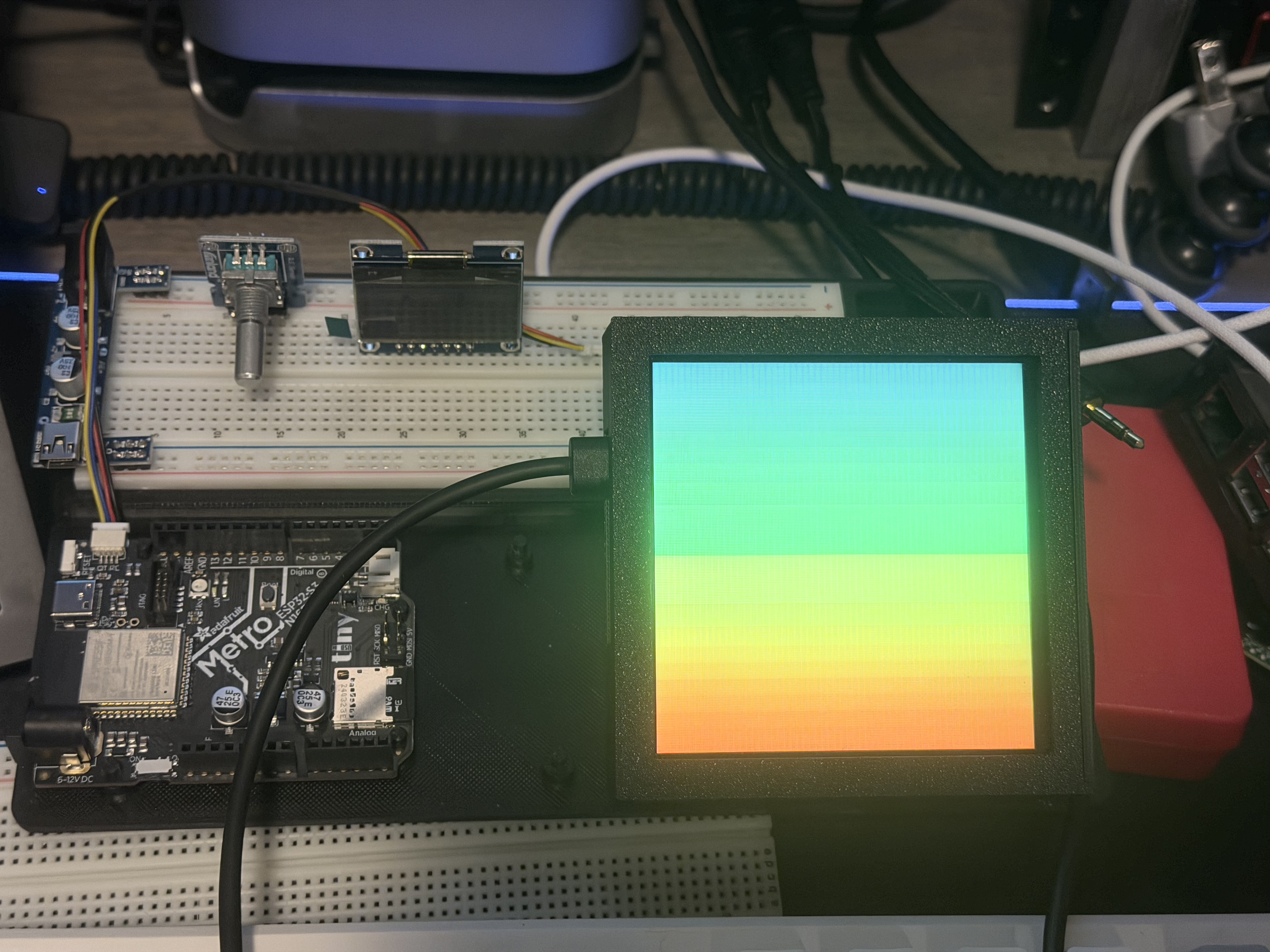
I’ve learned that a MicroChip MCP23017 can be used to connect 8 encoders over I2C and the I2C bus can have eight of THOSE addressed, so… 64 encoders, but from what I can tell you have to be careful with timing to make sure data isn’t missed, etc. Encoders just don’t seem to be “n00b stuff” beyond using a few of them lol. ESP32s have a built-in pulse counter and can handle 8?
at this point I’m just sticking with a Launch Control XL3 lol
AdaFruit makes a thing because of course they do lol
I think I need that thing. Holy hell the price.
1 Like
Yeah my my buddy is working on a groovebox/sequencer atm and a few months ago he was ranting about this and how easy it is to screw it up. he basically taught himself how to do this (wasn’t his dept. when he worked Sequential/Focusrite/DSI). yeah i’ll definitely have to pick his brain about it. i have the feeling he’s going to say “just buy a BCR or something like it” haha.
1 Like
As I understand it the way embedded engineers usually deal with encoders in general is to use interrupts instead of constant polling. That leads to a whole different set of timing issues (processing the ISR handler instead of hitting every encoder every cycle) but it seems to be easier on the CPU when you get over a certain number of inputs. Except interrupts don’t play nice with multiplexers (we got an interrupt but we can’t see exactly which device because it came through the mux) so you have to have a board with enough GPIO to handle all your inputs, or running sub-MCs to handle banks of them…yeah, there’s a reason you don’t see a ton of 32 encoder units out in the wild lol. If you just need, say, four of 'em, no big deal, but it becomes an absolute mess when you get into double digits.
Seems like both polling and interrupt limitations can be overcome if you’re smart and experienced and clever, but I’m none of the three when it comes to embedded systems, so like you I think I’m just going to spend my way to glory, which really amounts to sticking with my LCXL for now lol. I might try out an analog pot setup and see how it does me compared to encoders since it’d be way easier (and cheaper) to implement.
I’ve read about the interrupt thing, and timing, and yeah it seems pretty daunting. Someone on Youtube said they got encoders working on an Axoloti using just one pin but I’d need to hunt that down again and I’m probably misremembering something. this guy has 32 pots running on an Axoloti Core: EDIT he is using a Teensy to read all the knobs and is sending MIDI to the Axoloti
I loaded his patch and it only takes 57% DSP load running two Braids models, a simple triangle “cheap” oscillator, and then the LFOs, filters, and FX (reverb and ddelay)
Last night I got an Axoloti reading a potentiometer to control the rate of an LFO. Was really easy thb. The encoder modules in the patcher just said “rotary encoder 1” and I haven’t figured out which pin that is lol. Doing a pot knob I could pick the pin to read from a drop down menu.
Current plan is to use an Axoloti to hash out a drone synth idea and then move to ESP32 or Teensy if I need more CPU. Digital oscillators x 3, analog filter of some type per oscillator, LFO or AR EG per filter (probably analog). Probably do a 2399 delay or something, too.
@Artificer this thing came up:
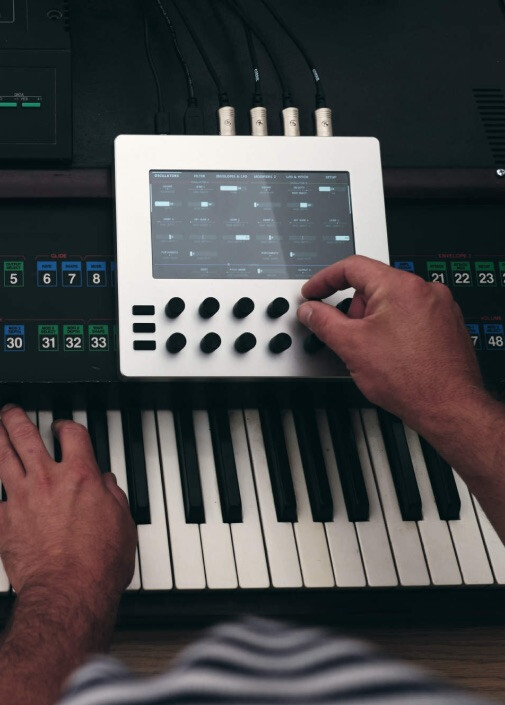
Another expensive option:
I discovered that with Teensy they’ve set up a visual patcher for Teensy audio stuff, but all it does is initialize things. You add a waveform, then in the code actually tell it what to do. I guess it’s a little easier than knowing all the things. You hook up all the connections then it spits out code to copy/paste into the sketch.
1 Like
Electra is sick!
When I had an OB-6, I was aware some other company sold an add on to give it some extra lfos and multi stage envelopes all delivered thru midi. That box was $1400 when it was in stock (never). This looks like it could do all that and way more, for all my synths. This is definitely getting more research later.
If this has a built in sequencer and can handle mpe while syncing to my daw (to get around fl studio’s lack of mpe), then….
1 Like
I saw that one, think I mentioned it earlier. I found the site, swooned, then noped out when I saw the prices. They’ll also build custom ones to your specifications which is pretty cool but not really what I’m looking for. The Electra is also miss for me; very neat (and reasonably priced!) but I’d rather have more knobs than screens taking up desk space, since I’m literally trying to control things already on a screen. Does look like a cool option for people that want to see what they’re affecting.
Haha thank god, I spent like 20 minutes staring at my Axoloti wondering how the hell you’d do that. Pretty smart to build it into it’s midi controller. From what I can tell from his other videos, those are pots and not encoders so he’s just using multiplexers for all the input.
I’m increasingly wondering what I’d get from encoders besides longer lifespan and heartburn trying to implement them. There are some edge cases, sure, like channel selections where you want to wrap around from 15 to 0 or whatever, but MIDI notes have a min and max, 99% of things I want to change have a min and max, pots are cheap, dumb easy to set up and have a min and max that easily maps to the same min/max I need.
I’m pretty sure ESP32’s will do 12-bit analog resolution so you could even do high-res MPE/OSC messaging with simple analog controls. I’ve got a handful of ESP32 boards on order and am interested to see what I can make of it.
That sounds pretty sweet! I’d love to hear how it shakes out.
1 Like
I bought a couple of these ones a while ago
He also makes eco/hydro ones for placing in the dirt and water
1 Like
I saw a guy making a Teensy-based synth and some of it was a lil daunting, or tedious at the least, when it came to doing oscillators. Pitch, pitch range, controlling pitch, etc. Thank God there are people smarter than me doing things I want to do and telling people how to do it lol
I’m using VCVRack when I’m away from an Axoloti while keeping in mind the constraints of the Patcher software’s implementation of say, Braids. There is no Modulation amount knob to access/control for Axoloti, for example. It’s giving me a lot of ideas on ways to implement a so-called “drone engine” (term that guy used in the above video).
I may end up going the lazy route at first and just use my LCXL3 and MIDI CCs. I can color-code the LEDs in the Components software to help me keep track of things. I need to remind myself to stop trying to do everything all at once.
Running an Axoloti with my own customized “drone machine” patch with my LCXL3 connected to it over USB only. One page/custom view can control 2 “engines” at a time. The patch has 5 atm and only at 65% DSP. I’ll probably keep adding stuff until the DSP is close to being maxed out XD
EDIT uploaded patch to internal flash to run on startup and nothing is happening -_- and nothing happens if I connect to the Axoloti and try to run Live from the patcher software.
Fucking hell lol.
EDIT2 got it running again connected to the Patcher/Live, but it still isn’t working stand-alone and I have absolutely no idea why -_-
EDIT3 uploaded start.bin to the sd card and it works now in standalone ¯_(ツ)_/¯
EDIT4 Some settings make for a bit of a generative thing. I think I’d rather control with potentiometers as a way to save what was going on at the time of power off
Here’s 6 minutes of it just going along doing its thing XD
There’s no FM on the Braids models in Axoloti which is a bummer. I’ll still work on building an FM engine though.
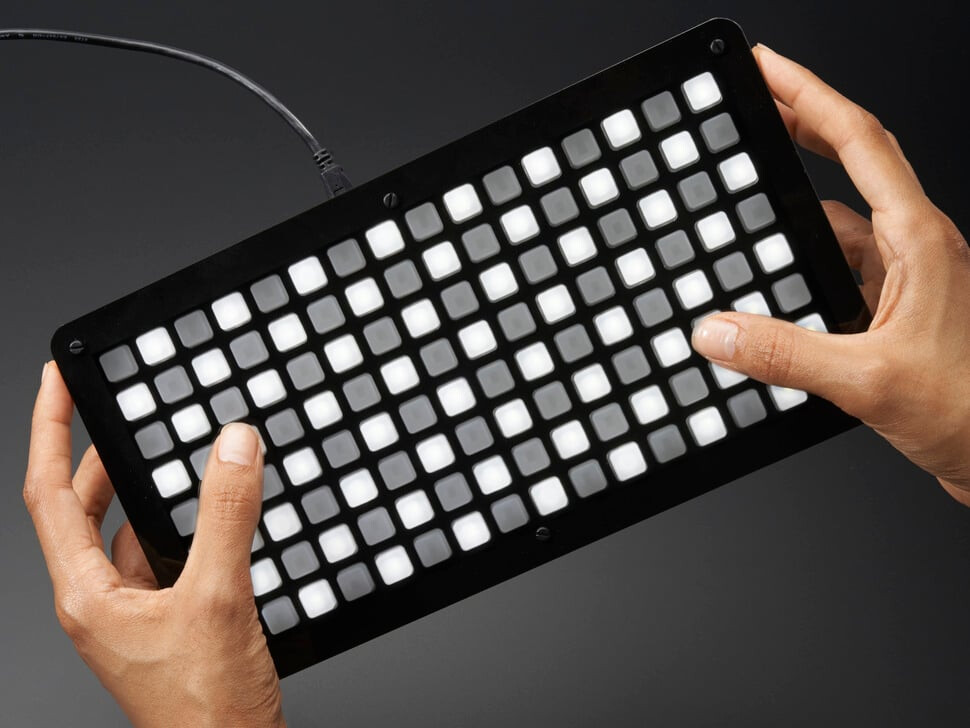
I’ve also been assembling my old AdaFruit Trellis-based “HellaUnztrument” which is basically an Arduino Leonardo-based open source 8x16 Monome. Soldering the Trellis tiles edge to edge is miserable as you have to bridge two connections with solder and the solder just does not want to go across the gap. It’s also single-colored LEDs (white in the case of mine), and they now sell an RBG Trellis w/ LEDs already in place. I’ll get this one working first, then worry about upgrading it at $12.50 x 8  The general idea is to modify the code so it’s a basic 8 lane 16-step CC sequencer for the Axoloti Soundscape Engine
1 Like
Pretty damn cool. I love the slow progression and morphing. Is that modulated wavetable stuff? What’s all’s happening in the patch?
That sounds miserable, and maybe a little insane. Are these SMD pads or through hole? I’d be tempted to scavenge all the little snipped resistor legs in my carpet and make tiny wire bridges before trying to glob solder onto things that don’t want it. Looks like a cool project and handy piece of gear, though.
Somewhere along the way I’ve misplaced 2 of the 4x4 elastomer button pads for the Untztrument. So much for finishing it this long weekend XD no idea why they weren’t in the box with the rest of it. they have to be somewhere, though ¯_(ツ)_/¯
this is the plan after snipping leads for 128 LEDs lol
in this case it’s using the ChaoticFeedbackFM and DigitalModulation models from Braids. There’s a sine LFO going to Color and Timbre of each one and then the BP filter has an LFO on cutoff.
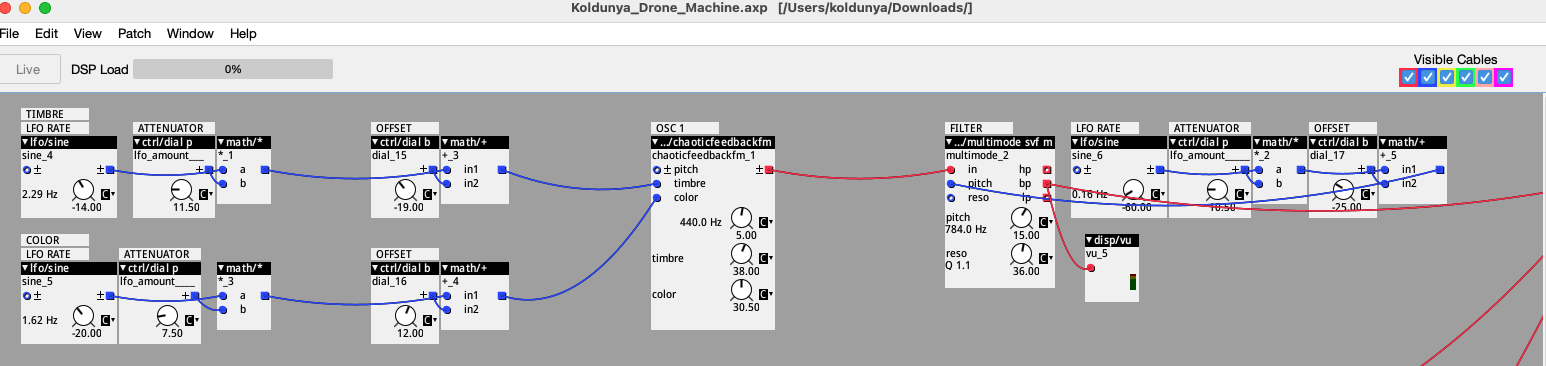
The other three are using Wavetable, ClockedNoise, and Harmonics.
1 Like
MicroCenter (local electronics chain in the US, basically like the best parts of Fry’s Electronics and Best Buy)'s “maker” area is often disappointing. The Arduino Giga R1 they had in stock mysteriously vanished after placing a web order for pickup. They suggested/offerd a Mega as a substitute lol.
The Giga is pricey so it’s probably for the best, but it has 76 digital I/O pins and 3 I2C busses and can run a program on each processor. Oh well. They often can’t find stuff there and I get it, that area is an unmitigated disaster of misplaced or randomly placed items. But claiming to have a $70 microcontroller suddenly disappear is a new one.
1 Like
Holy crap, that’s an impressive bit of kit. No idea what I’d use it for but the GPIO alone is crazy. Not sure about that price tho… I guess it’d make a good development platform but I don’t think I could bring myself to permanently box it up in a device.
Inventory always sucks, but post-holidays at a big box store I’m sure it’s a complete shitshow. Breakage, theft, returns, wrong labels, wrong shipments, there’s a litany of things that can go wrong coupled with paying shit wages the people that are supposed to keep track of it. My local home improvement stores are similar (“It says here you have 43 of them”, “Yeah, none in stock, haven’t had them in over a year”) and it drives me up the wall despite understanding why it’s a mess.
That said I’d give my eyeteeth for a Micro Center nearby; I think the closest one is probably 5 hours away in Dallas. I stop in whenever I’m there and am always amazed at the stuff they have. It ain’t no Radio Shack (RIP), but it’s a sight better than my sad sack Best Buy that basically has zero Maker/STEM stuff, and none of the sweet sales that MC seems to have.
1 Like