Mmm, about ‘do what thou wilt’, I know a couple of Thelamites, heard bits and pieces. Familiar with the basis though: do what thou wilt shall be the whole of the law; and love is the law, love under will.
Recently: The Intimate Adventures of a London Call Girl by Belle de Jour, which is really funny, and quite interesting.
Complexity by Roger Lewin, talking about the spontaneous emergence of order right at the edge of chaos (the chaos theory type, like you see in nonlinear dynamical systems), also very interesting, fascinating examples of how this systemic property seems to be behind much of nature and life.
Right, I think that is in the diary, too, although I would have to speculate to even begin with thinking about the intended interpretations of it. If you have some knowledge in that area, you might get a lot more out of the diary than me.
That sounds interesting, have to add it to my list…
I hath been summoned by the Barbarous Names of Old.
What’s up.
So yeah, ‘Do what thou wilt’ is equivalent to ‘Do your True Will’, essentially meaning such things to the effect of ‘Find and fulfil your inner nature, attain to your truest and most authentic self’, akin to the eastern ideas of enlightenment.
‘Love is the law, love under will’ is the formula of that attainment, being the idea of ‘union and reconciliation of opposites’ on a somewhat cosmic level. You could say its in line with ideas of balancing your inner world and your outer world so they perfectly align, and you act in all things according to your ‘Will’, or according to your nature, free of inner conflict. Sure, there may be outer conflict in response to that, as ‘True Will’ not aspiring towards it is not necessarily a peaceful process, but that’s whole other discourse. Either way, Thelema uses a lot of frameworks and tools to map that growth, such as Qabalah and Tarot. It doesn’t really force any one idea or another, but they make for interesting and powerful tools for mapping consciousness, if applied appropriately.
I just really like using that summoning power every now and then. I’ve been thinking of him lately and this is how he let’s me know he’s doing all right
“Illuminatus!” by RAW? That’s awesome, I don’t remember all the crazy details, but absolutely loved it when I read it many years ago. Also got “Everything Is Under Control: Conspiracies, Cults, and Cover-ups” by RAW, that one is very interesting and funny, too.
I wish you lots of fun with it! Feel free to start a discussion about it when you have finished it.
“Minority rule - Adventures in the culture war” by Ash Sarkar. Interesting, but I had hoped for something a bit less polemic and a bit more objective or epistemic. Some interesting thoughts and stories, though.
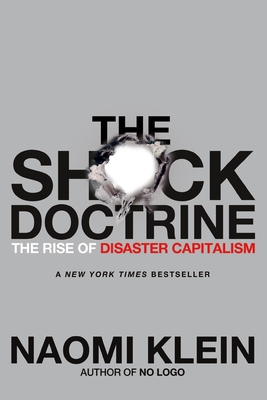
I just finished this one. It is brutal. An uneasy at best, and absolutely repulsive at worst read, yet essential knowledge to have. If you want to understand how the US become what they are right now, look no further. It’s even more relevant after yesterday’s most shameless, vicious attack from the GOP on the poorest and most defenseless people in this country.
The bestselling author of No Logo shows how the global “free market” has exploited crises and shock for three decades, from Chile to Iraq
In her groundbreaking reporting, Naomi Klein introduced the term “disaster capitalism.” Whether covering Baghdad after the U.S. occupation, Sri Lanka in the wake of the tsunami, or New Orleans post-Katrina, she witnessed something remarkably similar. People still reeling from catastrophe were being hit again, this time with economic “shock treatment,” losing their land and homes to rapid-fire corporate makeovers.
The Shock Doctrine retells the story of the most dominant ideology of our time, Milton Friedman’s free market economic revolution. In contrast to the popular myth of this movement’s peaceful global victory, Klein shows how it has exploited moments of shock and extreme violence in order to implement its economic policies in so many parts of the world from Latin America and Eastern Europe to South Africa, Russia, and Iraq.
At the core of disaster capitalism is the use of cataclysmic events to advance radical privatization combined with the privatization of the disaster response itself. Klein argues that by capitalizing on crises, created by nature or war, the disaster capitalism complex now exists as a booming new economy, and is the violent culmination of a radical economic project that has been incubating for fifty years.
It is actually heartwarming that such books are NYT best sellers. It shows that many people are choosing not to ignore the reality we live in anymore. By learning & being informed, one can make better conscious choices that, little by little, take our world to a less shitty place.
I mean, sure. Like every ‘best of’ art category (Grammys, Emmys, Tonys, whatever-ys) it’s at best a popularity contest, at worst pure payola as advertising. It doesn’t necessarily make the art bad, just the list itself. It also doesn’t show scale - if only 1000 people in the world buy books, selling 900 books puts you in a best seller list, but that’s a pretty sad scene.
I’m just a little heartened that it suggests that people somewhere still read, even if it’s dumb stuff.
Studies I made up show that 99% of broducers don’t RTFM
I think I might be within that margin of people who don’t read literature in the traditional sense. While I usually do a hell of a lot of manual-reading and glossing over whatever documentation is needed for specific projects, I likely wouldn’t know a good story if it bit me on the ass.
I might also be one of the least well-rounded people on the planet though, so that might have something to do with it.
Yeah, but… well… I dunno… the book was published in 2007… before that orange guy, before Covid and even before the 2008 financial clusterf*** - doesn’t seem like we have learned so much since then tbh… on the other hand, all things take their time, so there is still hope I guess.