Been getting into tracker music recently and kind of looking for a better place to start.
My intro into the software was something called 1tracker, basically an experimental tracker used for ZXSpectrum in particular. Not very user friendly but i liked the process of making music. Then I figured out that it only exports in .scl, .ay, .tap, and assembly code. I’m 90% convinced that I’m not gonna figure out a way to convert that into an audio format. Tried looking at the creator’s forum posts on some tracker forum and my question was never answered, so i’ll assume no.
I might just download the Renoise demo and go from there, see whats up.
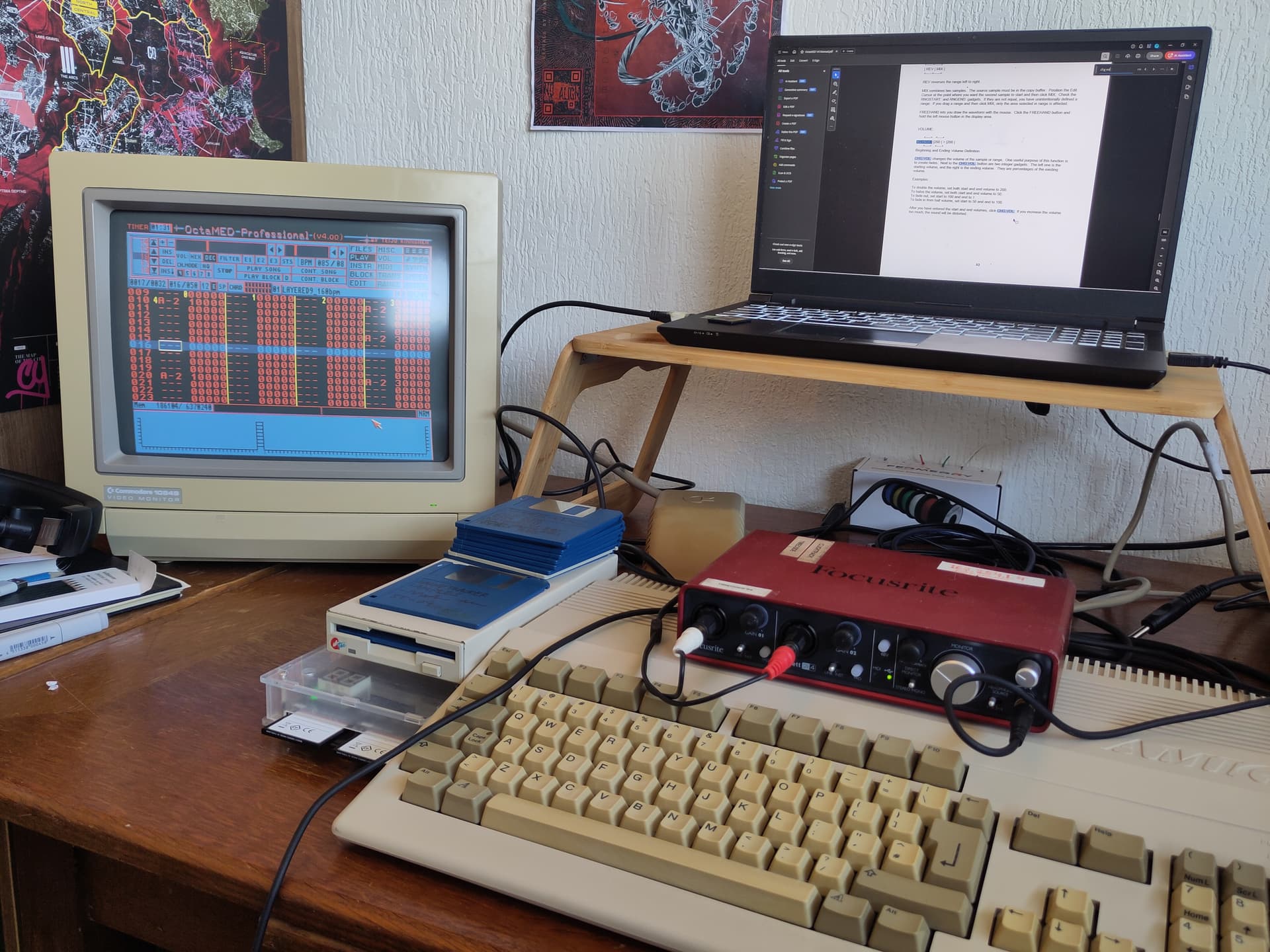
Recently I’ve been working on some jungle-adjacent tunes using Octamed 4 on the Amiga. I use an Amiga 500 with an ACA500Plus accelerator board. Started out on a Polyend Tracker a few years ago and that got me hooked on the workflow, and then I wanted to go full oldschool so I got a second hand Amiga. There’s something cool about using trackers that affects the way songs are built, but I can see how it isn’t for everyone. It definitely helps to be methodical and the hardware limitations force me to be very selective about what sounds I use.
i’ve been getting back into some tracker music stuff, and i saw somewhere that Boku mo wakaran by Bogdan Raczynski was recorded from a speaker from his computer in the late 90’s. it would explain the weirdly low fi sound. anyhow, i’m here thinking “hey that’s a good idea, why didn’t i think of that?”
reading my earlier post on 1tracker was interesting since i completely forgot about that. i don’t have an old computer like @EvasiveManeuvers does, but maybe i can work something out. i do have a focusrite audio interface, although it’s newer. i’ll fiddle around with it and post my results later. i think 1tracker dosent use that much space, which is perfect for my low capacity computer (windows and 60 gigs of space does not bode well). worst case scenario i have a pretty good quality speaker to record off of with my phone, then i can clean it up in audacity.
You’d be surprised how well Lubuntu + Renoise runs on a potato, and the pricing is pretty much pay-what-you-want since there are only a few demo restrictions. Totally worth checking out for the new update, too, which integrates livecoding and all sorts of other crazy shit.
Advanced. Started with Buzz and buze, then went to Renoise after milkytracker.. From DS nitrotracker to NerdSEQ. Now it’s pretty much NerdSEQ and Renoise
I still use Jeskola Buzz regularly. Buzz is a tracker but it is modular and really powerful.
Pretty buggy but incredibly powerful.
Amazing for glitchy, retriggered/reversed beats.
Amazing for quick, creative sound design - great for shaping ambient synth sounds/textures with lots of effects chains (I use VSTs and VSTis in buzz).
It has problems. I find it difficult using VST3 plugins. Sometimes it crashes. I wouldn’t use it for recording live instruments/vocals. I wouldn’t use it live. I use Reaper for mixing, mastering etc.
Someone is rebuilding a version called Rebuzz that looks promising.
I use it regularly in my different music projects (as well as Reaper as my other DAW): Grids/Units/Planes, YEARNS, Dual Dialect…
Yeh, I remember the good old days in the IRC. I have quite a few regulars that I spoke to that helped me get started with crackers, and my overall experience has always been very positive with the communities. PUZZ has always been very glitchy and very unstable. They’ve even lost the code a couple of times. That’s why the start of BUZE. in fact, I had a really good Buddy from the Netherlands which is how I ended up getting into Atari ST. Of course I use SKIZM every once in a while basically if it’s a tracker, it’s got a good chance it is going to be try out.
I’ve never really gotten into the whole piano role thing although I to use REAPER. Which is surprising to me that you don’t haven’t mentioned RENOISE=p have you given it a try? With the release of 3.0 it’s amazing. And for the fact that it stands against pretty much any dot out there at the moment and consistently achieve the status at a $75 price tag. I believe it’s a great ethical model for sure.